AI Glabella & 11 Lines Botox Visualizer: Preview Frown Line Smoothing
Targeting the procerus and corrugator muscles erases the vertical '11' creases between your eyebrows, eliminating an unintended stern, stressed, or angry appearance.
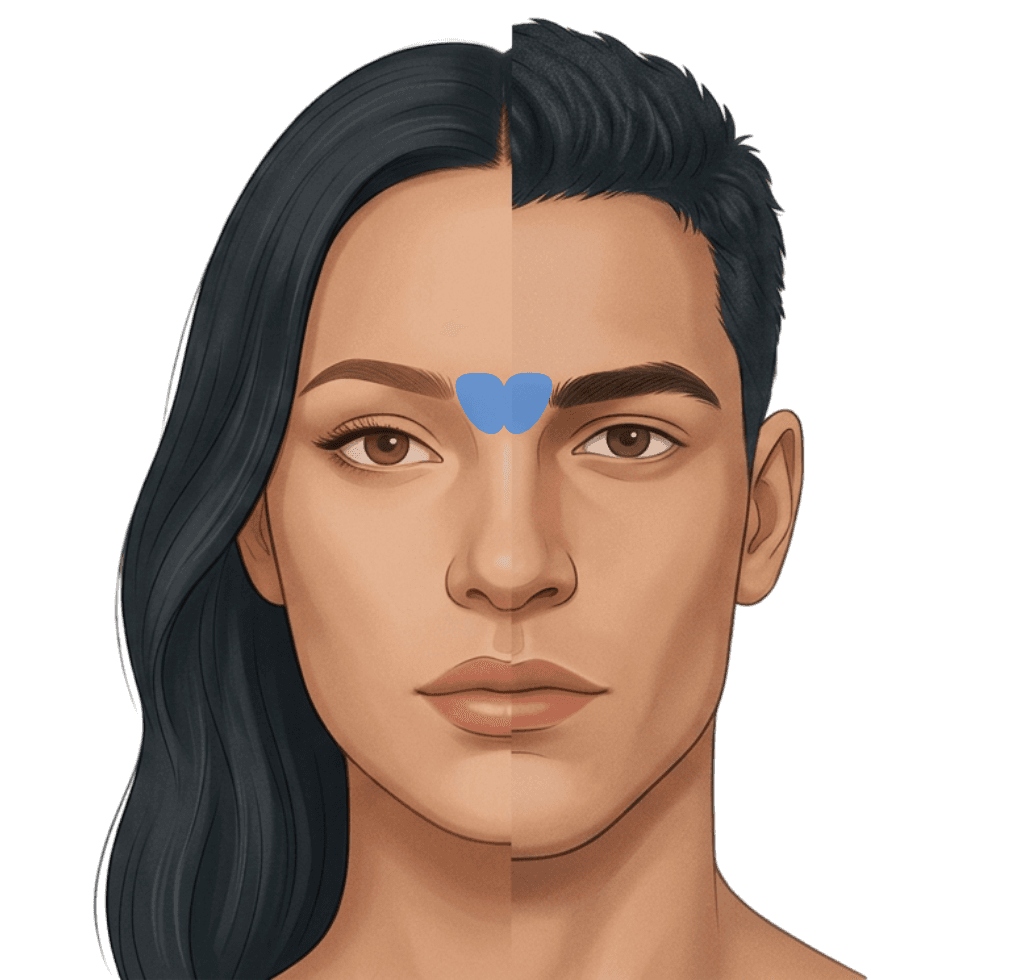
Preview Procerus & Glabella (11 Lines) On Your Face
Take a selfie or upload an existing photo to generate a photorealistic preview using our clinically informed AI model. Compare Subtle, Balanced, and Defined intensities before your consultation.
✦ 1 free preview on sign-up · No subscription required · Credits never expire
Clinical Mechanism & Anatomy
The corrugator supercilii pull the brows inward while the procerus pulls the bridge of the nose downward. Relaxing both restores a calm, open brow.
Key Concerns Addressed
- Vertical creases between eyebrows (the '11' lines)
- Horizontal bridge crease across the top of the nose
- Chronic furrowed or stern facial expression
Simulated Intensity Profiles
Our AI generates previews according to real clinical dosing steps rather than arbitrary filters.
subtle
Relaxes habitual furrowing while leaving natural brow convergence (approx. 15–18 units).
balanced
Completely smooths vertical lines at rest and minimizes furrowing (approx. 20–25 units).
defined
Full immobilization of the glabella complex for maximum smoothing (approx. 25–30 units).
Frequently Asked Questions
Repeated Botox treatments soften deep static lines over time as the skin remodels without constant muscle creasing. In some cases, light filler or microneedling complements the result.
The glabella is the most common FDA-approved Botox treatment area in the world, with a decades-long clinical safety record.